LingvaLexa Brings the Propaganda Accountability Debate to Atlantic Council and Kyiv Independent
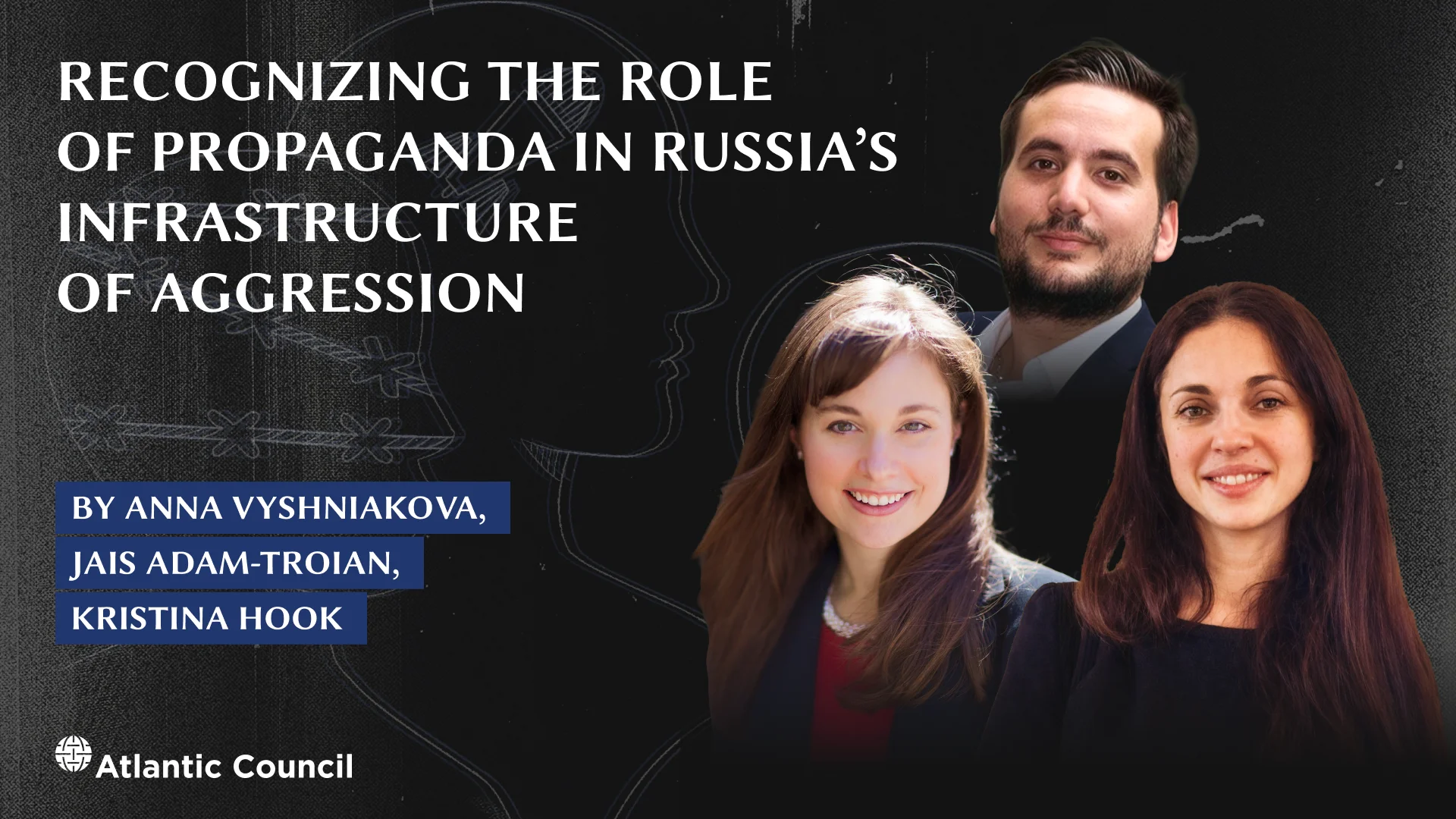
As part of its broader advocacy campaign, that is realised with the support of the Askold and Dir Fund, administered by ISAR Ednannia within the framework of the project “Strong Civil Society of Ukraine – Driver of Reforms and Democracy,” funded by Norway and Sweden, LingvaLexa is working to bring greater attention to the problem of war propaganda within the law enforcement sector and to advance discussion of effective legal and institutional responses to propaganda-related crimes. In line with this effort, Anna Vyshniakova, Head of LingvaLexa, together with assistant professor of psychology at Heriot-Watt University Dubai and a fellow at the NATO Stratcom Center of Excellence Jais Adam-Troian and assistant professor of conflict management at Kennesaw State University Kristina Hook, has co-authored a new article for the Atlantic Council examining the role of propaganda in sustaining Russia’s war against Ukraine.
The article, “Recognizing the role of propaganda in Russia’s infrastructure of aggression” argues that Russian propaganda should not be viewed merely as a matter of disinformation or public messaging. Instead, it should be understood as part of the broader infrastructure that enables, sustains, and legitimizes military aggression.
Drawing on emerging empirical evidence, including survey data from Russian prisoners of war, the authors show how adherence to Kremlin propaganda narratives correlates with willingness to fight, readiness to return to combat, and the dehumanization of Ukrainians. The article also calls for a more systemic response to hostile state propaganda. It emphasizes that accountability efforts should extend beyond public-facing propagandists to the wider chain of actors involved in the design, coordination, and dissemination of propaganda as part of a structured state apparatus.
Anna Vyshniakova also took part in an episode of Ukraine Insights, a podcast by the Kyiv Independent that features conversations on key political, legal, and security issues shaping Ukraine and the wider region. In the episode, titled “Words That Kill: This Is How Propaganda Changes Soldiers,” she discussed the measurable impact of Russian propaganda and information warfare in the Russia–Ukraine war. The episode also examined whether propagandists can face legal accountability, how to distinguish propaganda from protected speech, the role of sanctions in responding to Russian disinformation, and the ways social media, gaming, and youth militarization help spread dehumanizing wartime narratives.